As an Amazon Associate, we earn from qualifying purchases. Some links on this site are affiliate links at no extra cost to you. Our recommendations are based on thorough research and editorial judgment.

Micro-Breaks and Stretches for Women Working in Heels

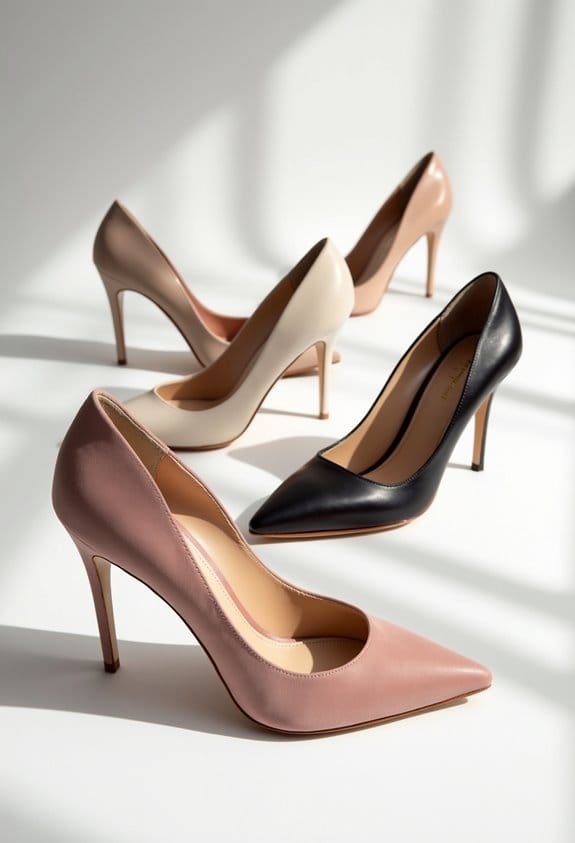
Micro-breaks and stretches are game-changers for women who wear heels daily. Taking a short 5-minute break every hour boosts circulation and reduces fatigue. Try towel stretches to target those sore calves and calf raises for stability. Sneak in ankle circles and toe wiggles while you’re at your desk—it’s like giving your feet a mini spa day! With a little practice, these techniques make those stylish heels feel more comfortable. Want to know more tips for foot health?
Key Takeaways
- Take 5-minute micro-breaks every hour to enhance blood circulation and reduce foot pain when wearing heels.
- Perform towel stretches and wall-based heel stretches to target calf muscles and improve flexibility.
- Incorporate ankle circles and toe wiggles during breaks to strengthen foot muscles and alleviate fatigue.
- Practice calf raises along with toe tapping to build stability and support while wearing high heels.
- Choose supportive footwear with block heels and prioritize practical shoe choices to minimize foot strain.
Importance of Micro-Breaks for Foot Health
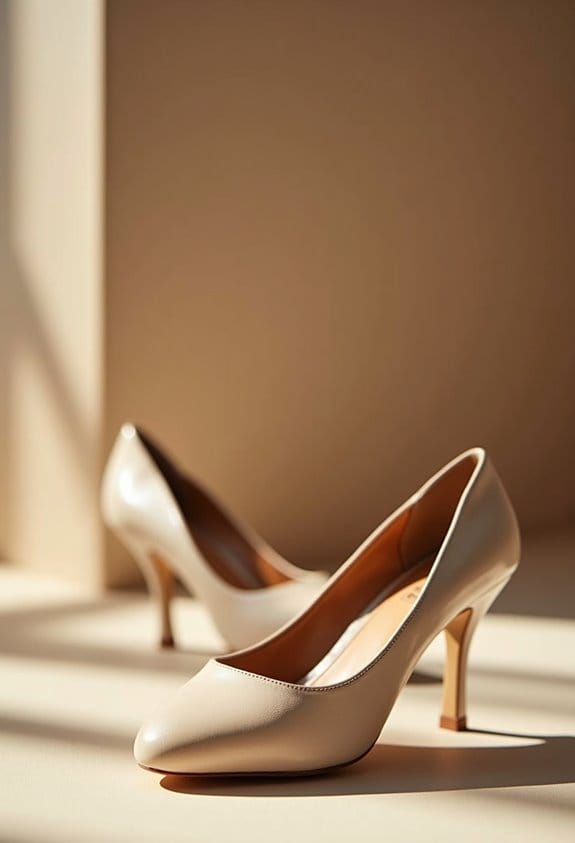
Imagine a momentary escape—your feet crying out for relief after hours in those stunning heels. Taking micro-breaks can greatly improve foot health, especially when worn for long periods. These short intervals allow feet to rest, helping to reduce pain and minimize the risk of developing plantar fasciitis or bunions. By stepping away every hour, even for five minutes, you can boost blood circulation, preventing swelling and discomfort. Plus, these breaks can actually strengthen the muscles in your feet, easing fatigue. Consider it a necessary recharge, like plugging in your phone! So, when you feel that familiar ache, remember that a well-timed micro-break can be a game changer for your overall foot health. Incorporating heels with cushioned support during wear further enhances these benefits by reducing pressure and shock on your feet.
Effective Foot and Ankle Stretches
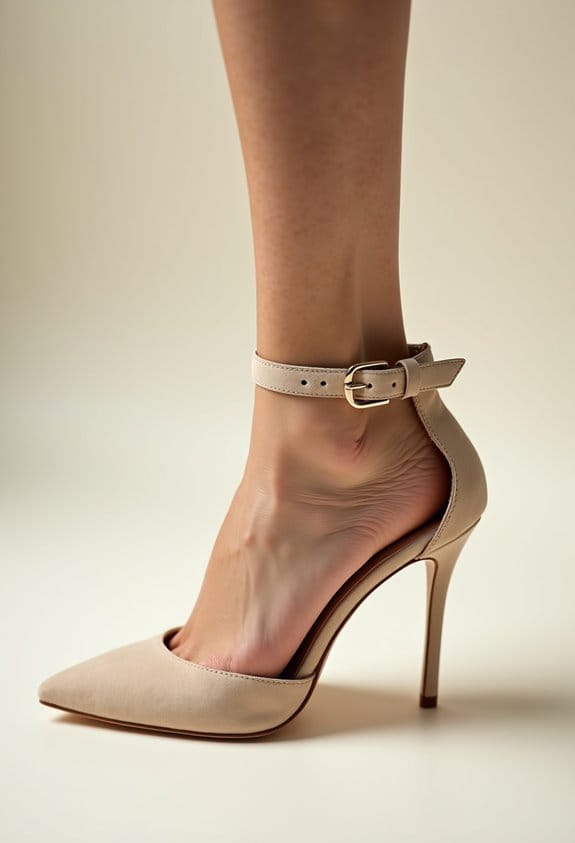
Foot and ankle stretches play an essential role in alleviating discomfort for those who frequently wear heels. Effective foot and ankle stretches, like towel stretches, target calf muscles. These stretches can greatly ease foot pain by promoting flexibility and blood flow. Wall-based heel stretches, for example, involve pressing the knee towards the wall, making them perfect for any heel-wearing woman!
Calf raises paired with heel cord stretches not only support ankle stability but also improve circulation—a must for long days in heels! And don’t forget tennis ball stretches: simply roll a ball under the arch of your foot to relieve tightness. Regular ankle circles further strengthen the intrinsic muscles, essential for maintaining balance and preventing injury. Embrace these stretches to feel fantastic in your heels! Incorporating stretches that focus on arch support can significantly reduce plantar fascia strain and enhance overall foot comfort.
Recommended Products

【PREMIUM FAUX LEATHER & MAXIMUM COMFORT】Upholstered in high-quality faux leather, this recliner is water-resistant, durable, and effortless to clean. Featuring an overstuffed backrest and a high-density foam cushion, it offers exceptional lumbar support and a cloud-like seating experience for hours of relaxation.

Retains all functions of the stock boards with the added benefit of three riding positions (higher, farther-forward, and rearward); Provides relief from fatigue
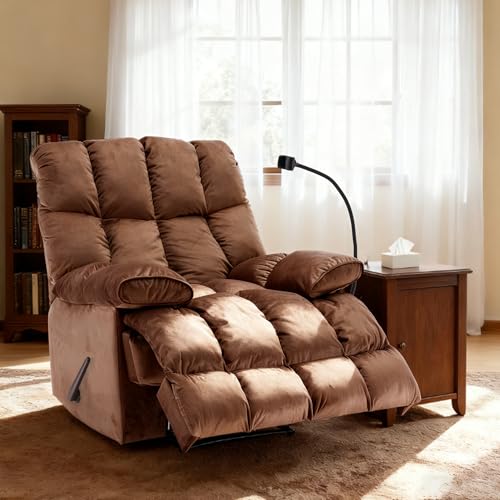
OVERSIZED COMFORT: Manual recliner features a spacious design with a 400-pound weight capacity, comfortably accommodating most larger body types. Wide recliner chairs for adults's upgraded 22-inch seat width provides enhanced sitting and reclining comfort, offering ample room to stretch out and relax—making every moment of rest pure bliss
Sneaky Stretches to Incorporate Into Your Day
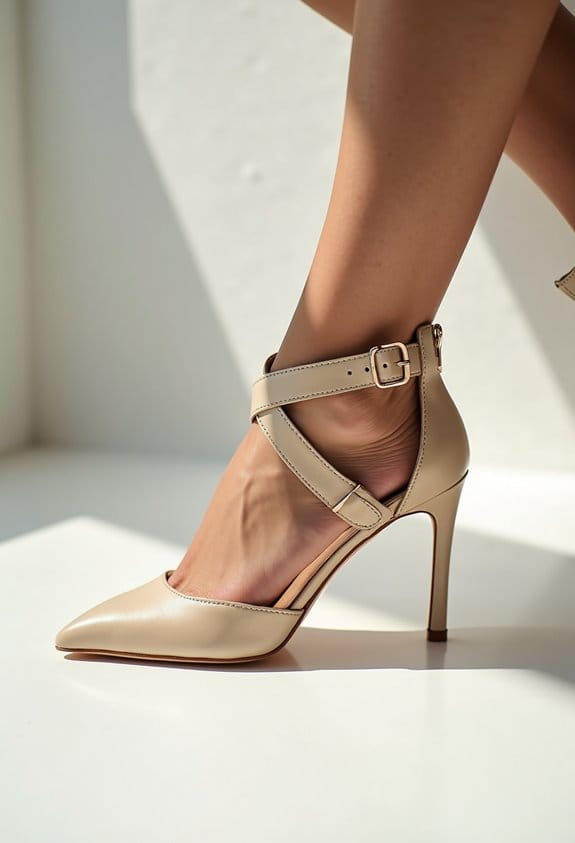
How can busy women sneak in stretches throughout their day, especially when life gets hectic? They can easily incorporate high lunges while waiting for the kettle to boil, stretching hip flexors and improving flexibility. While commuting, focusing on breath can turn ordinary moments into opportunities for relaxation. At bus stops, a discreet tree pose modification helps enhance balance and strengthen lower body muscles. When tying shoelaces, performing hamstring stretches can reduce tension by keeping the front leg straight. Finally, taking squat breaks while working at a laptop can improve posture and relieve lower back pressure. These sneaky stretches not only promote effective foot care but also help combat discomfort often caused by high heels, reducing pressure and preventing foot conditions. Additionally, choosing heels with built-in gel pads can provide extra cushioning to minimize neuropathic foot pain during long days.
Recommended Products


Relaxation Techniques to Alleviate Foot Pain
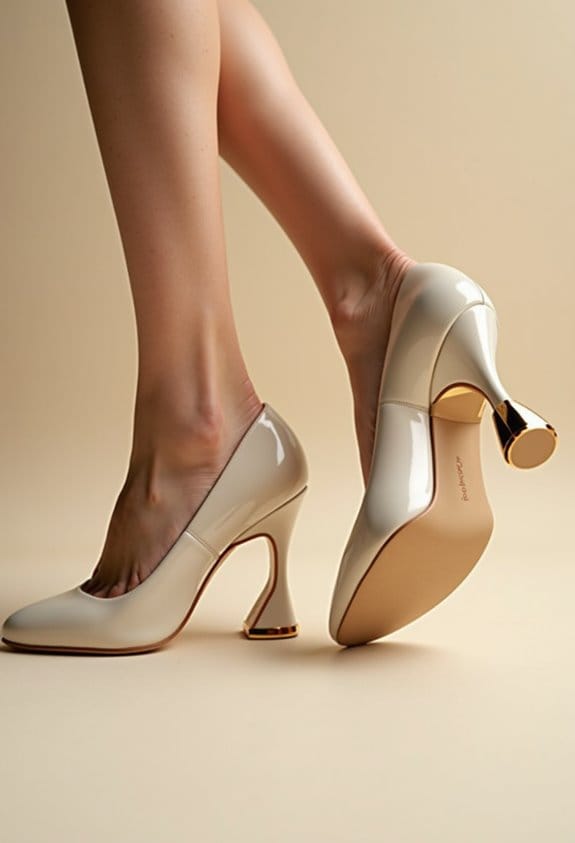
For women balancing a busy lifestyle while sporting high heels, relaxation techniques can make a world of difference in alleviating foot pain. Gentle foot massages, targeting the arch and heel, can really help relieve tension and improve blood flow. Imagine rolling a golf ball under your foot—it’s like giving yourself a mini spa treatment, and it can soothe those muscles under stress. Taking it a step further, contrast baths alternating between ice and warm water can greatly relieve discomfort after a long day. Simple towel stretches can effectively target your Achilles tendon and calves, making those tight spots feel better. Mindfulness practices, focusing on breath and relaxation, can not only relieve pain but also promote overall foot health—talk about a win-win! Incorporating ankle circles and toe wiggles while wearing heels can further enhance foot circulation and reduce fatigue.
Strengthening Exercises for Improved Stability

Wearing high heels can transform any outfit, but those stylish shoes often compromise stability and comfort. To counteract this, women can incorporate strengthening exercises like calf raises and ankle circles into their routines. These movements not only improve balance and mobility but also support the ankle and reduce injury risk. Engaging in toe tapping and arch stretches helps build the critical foot muscles essential for walking gracefully in heels. Regularly practicing these exercises guarantees better alignment and stability, leading to a more comfortable experience. Think of it as giving your feet a little workout—who knew stability could come with a side of fitness? With consistent effort, improved foot health and reduced discomfort become attainable goals, making high heels a joy to wear! Additionally, choosing heels with arch support and cushioned footbeds can further enhance comfort and safety when wearing heels regularly.
The Benefits of Regular Stretching
While many might think of stretching as a mere afterthought, it plays an essential role in the lives of women who frequently wear high heels. Regular stretching routines can greatly improve flexibility and range of motion, especially for those dealing with tight calf muscles. By incorporating these stretches into daily life, women can alleviate discomfort from prolonged standing or walking in heels. Enhanced blood circulation—thanks to stretching—helps prevent fatigue and swelling. In addition, careful attention to ankle strength and stability through micro-stretches can reduce the risk of falls. Ultimately, these practices not only support overall posture and alignment but also promote a greater sense of comfort. After all, who wouldn’t want to strut with both style and ease? Choosing heels with proper cushioning and arch support can further enhance comfort and reduce foot strain during wear.
Creating a Workspace for Comfortable Movement
Creating a workspace that encourages comfortable movement can make a world of difference for women who spend their days in high heels. Utilizing adjustable furniture allows for quick shifts between sitting and standing—switching things up can really alleviate pressure. Incorporating tools like a small footstool lets you keep your feet flat, while a balance board engages your core and gently supports your arch of the foot. If you find yourself with flat feet, custom orthotics can offer added comfort! Designate a stretching area to do those brief exercises. Just remember to stand hip-width apart and pull your toes towards you every now and then; a little movement really goes a long way! After all, who knew office environments could offer such relief? Additionally, choosing shoes with adjustable straps can help accommodate swelling and maintain comfort throughout the workday.
Recommended Products

UPGRADED PRO VERSION - HEIGHT ADJUSTABLE BACKREST: The Pro version features a 2-inch (5 cm) height-adjustable backrest to provide you with improved back & lumbar support. You can customize the backrest height to your preferred level simply by twisting the knob without getting off the chair. It is designed to give you an even more comfortable & flexible sitting experience

【Manual Swivel Glider Recliner】With a swivel rocking base, the all-around recliner chair can swivel 360 degrees and 30° rock forth and back. Extremely easy to use with side handle design, controllable 90-150° reclining angle, bring you the extreme comfort and theater experience at home. (Cannot be fixed reclining position.) The footrest is easily closed by pressing the heel of both feet against the bottom and pushing inwards.

STRONG & DURABLE: Slide tube steel frame design with a black powder coat finish. Single axle positioning. Easy-to-clean, comfortable vinyl upholstery that accommodates a wide range of users
Community Resources for Wellness and Support
Community resources offer a treasure trove of support and wellness for women steering through life in heels. Local community centers can be a goldmine, hosting wellness workshops centered on foot health and effective stretching techniques. Not only can community fitness classes target foot and ankle mobility, but they create a supportive environment for sharing experiences. Imagine a group practicing mini-stretches together—what a relief! Online platforms and social media groups connect women seeking advice, making it easier to share effective micro-stretch routines. Additionally, partnering with local chiropodists enhances awareness about foot health. They often provide educational sessions and screenings. Embrace these resources—your feet will thank you, and you might even leave the heels at the door every once in a while! Choosing footwear with a 2 to 2.5 inch block heel can balance style with support to reduce foot strain throughout the day.
Frequently Asked Questions
What Is the Best Exercise to Get Better at Walking in High Heels?
Balance exercises, such as calf raises and toe tapping, enhance ankle mobility and toe strengthening. Additionally, heel stands improve posture alignment, while gait training helps adapt to varying heel heights, leading to confident walking in high heels.
How to Quickly Break in Heels?
To quickly break in heels, consider using heel padding for comfort, employing stretching techniques, choosing appropriate shoe selection, gradually increasing daily wear, and exploring heel alternatives for temporary relief during the adjustment period.
What Muscles Do You Need to Strengthen for Heels?
Strengthening calf muscles, enhancing ankle stability, and supporting foot arches are essential. Core strength and balance training create a solid foundation, while hip flexibility contributes to graceful poise and comfort, akin to a dancer mastering her art.
How to Train Your Feet to Not Hurt in Heels?
To enhance heel comfort, individuals should explore arch support options, engage in daily foot care, and adopt stretching routines. Incorporating foot massage benefits and proper heel selection can greatly alleviate discomfort associated with wearing heels.